
Share with AI
Open this article in your assistant
Ask ChatGPTAsk PerplexityAsk ClaudeAsk GeminiAsk DeepSeekAsk GrokSwirl Flap Removal
Swirl Flap Removal
Swirl Flaps have often found in modern diesel engines and some petrol engines, aim to reduce emissions and improve fuel economy. However, their functionality can lead to long term problems, which prompts some users to remove the flaps.
What is Swirl Flap?
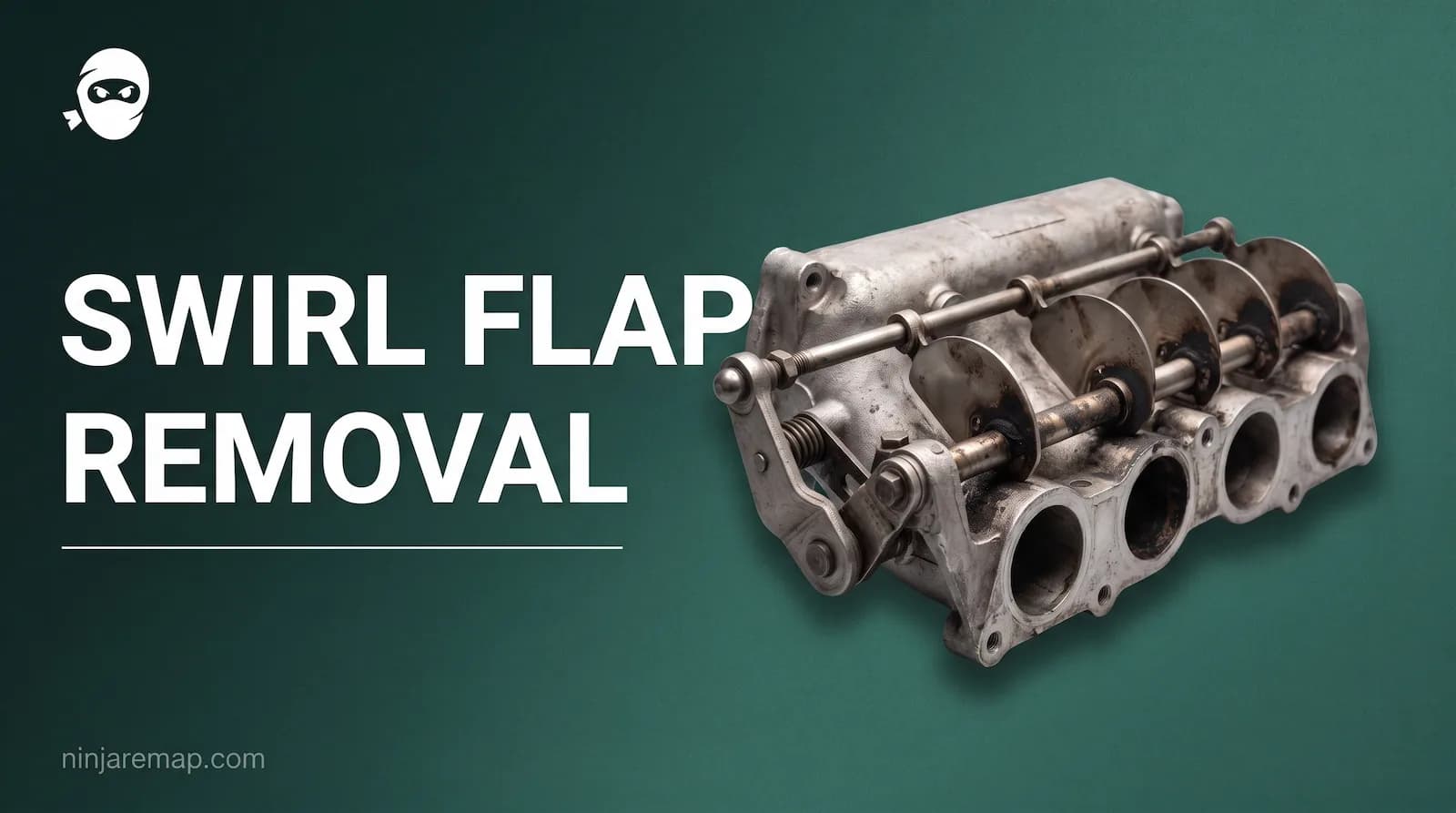
Swirl flaps are small valves located in the intake manifold. It controls airflow into the combustion chamber by adjusting its position based on engine speed and load. At low RPMs, the flaps partially close, creating a swirling effect that improves fuel-air mixing, leading to better combustion. At higher RPMs, the flaps open fully to allow maximum airflow.
How Does Swirl Flap Work?
The more turbulent the intake air that enters the cylinder the better the combustion. This enhanced combustion leads to lower emissions and better performance. To create more turbulence the speed of the intake air should be increased, to achieve that closing these valves causes the inlet air to reach the cylinder head port and loses its speed to the decreased section.
The swirl flaps are controlled by the ECU and are partially closed at lower RPMs. After a certain RPM (around 2000RPM) and load these valves fully open to supply the needed air for that certain RPM.
Why was Swirl Flap added into engines?
Swirl Flaps were introduced to engines in order to meet the emission regulations and improve low-end performance. By better the mixing of air and fuel at lower speeds, they help reduce emissions like NOx and CO. This system is beneficial for diesel engines which produce soot.
Which Vehicles Have Swirl Flaps?
Swirl flaps are mostly found in diesel engines, although some petrol engines also feature them like Toyota 1AZ-FSE engine. They were first introduced in most BMW diesel engines in 2000, and since then, they have been integrated into the engines of Many vehicles, including those from Audi, VW, Mercedes, Vauxhall, Opel and other manufacturers. Engines fitted with swirl flaps typically feature one flap per cylinder.
Here is a list of vehicles that have swirl flap installed:
BMW: M47, N47, and M57 engines.
· BMW 1 Series (E81, E82, E87, E88)
· BMW 3 Series (E46, E90, E91, E92, E93)
· BMW 5 Series (E39, E60, E61)
Mercedes Benz: CDI diesel engines, particularly in the OM642 V6
· Mercedes C-Class (W203, W204)
· Mercedes E-Class (W211, W212)
· Mercedes ML-Class (W164, W166)
Vauxhall/Opel: Z19DTH Engine
VW Group: 2.0 TDI and 2.7/3.0 V6 TDI engines.
· VW Passat (B6, B7)
· VW Golf (MK5, MK6)
· Audi A4, A5, A6 (with 2.0, 2.7, and 3.0 TDI engines)
Why is Swirl Flap removed?
Overtime, after some mileage, swirl flaps face challenges that can damage the engine performance:
-
1. Carbon Deposits
The main problem of Swril flap system is combination of carbon from the EGR system and oil vapors from the air intake often leads to heavy carbon buildup around the swirl flaps (Butterfly Valve). This Collection can cause the flaps to stick or jam in various positions, leading to engine inefficiency and triggering the check engine light : P2004 Intake Manifold Runner Control Stuck Open (Bank 1).
-
2. Manifold Leaks
Extended use and wear can cause the spindles holding the swirl flaps to fail, leading to leaks in the intake manifold. This leakage allows compressed air to escape, undermining the swirl flaps intended purpose of optimizing airflow. Furthermore, such leaks can disrupt the air-fuel ratio (AFR) and potentially damage other components like the DPF and EGR systems also lead to lower performance.
-
3. Mechanical Failures
Swirl flaps, particularly earlier metal models, are Tending to mechanical issues. The screws securing the flaps to their spindles can loosen over time, causing deadly failures. In some cases, these screws may fall into the engine’s combustion chamber, resulting in severe engine damage and costly repairs.
Due to the issues mentioned, car owners opt to remove Swirl Flaps in order to improve reliability and prevent possible future damages.
However, it’s important to note that removing the swirl flaps alters the engine’s airflow dynamics. While this can improve reliability, it may also lead to a Small loss of low end torque, depending on the vehicle and driving conditions. Proper ECU Tuning can help Balance for these changes and restore optimal engine performance after a swirl flap delete.
Swirl Flap Delete Pros & Cons:
Pros:
- Eliminates the risk of swirl flap failure like Bolt loosening in engine , which can lead to severe engine damage.
- Reduces maintenance costs associated with flap replacement or cleaning.
- Better airflow in high RPM and engine reliability.
Cons:
- May small increase emissions at low RPMs .
- Can result in engine fault codes if not properly removed or reprogrammed through ECU remapping.
- Potential impact on low end torque in some engines.
Video Guide: Swirl Flap Removal & ECU Remapping Explained
Prefer a visual breakdown? Watch the video below to see how swirl flap failures occur and how they are safely deleted via software before reading further:
DTC Codes Related to Swirl Flap:
Malfunctioning swirl flaps often trigger DTCs and engine check light (Diagnostic Trouble Codes) related to airflow and intake system. Common DTCs include:
- P2015: Intake manifold runner position sensor/switch circuit range/performance.
- P2004: Intake manifold runner control stuck open.
- P2006: Intake manifold runner control stuck closed.
- P1018: Swirl flap actuator stuck or faulty.
These DTCs can indicate problems with the flap mechanism or its associated sensors and actuators.
What are the common Symptoms of Swirl Flap Malfunction?
- Reduced engine performance and responsiveness.
- Engine warning lights or error codes.
- Rough idling or misfires.
- Increased fuel consumption.
- Black smoke from the exhaust due to poor combustion.
- Unusual noises from the intake manifold.
How to delete Swirl Flap from an engine through ECU remapping?
Swirl flap deletion can be Performed via ECU remapping or ECU tuning, which involves modifying the engine control software to disable the swirl flap function or related DTCs. The steps typically include:
- Reading the original ECU map/ original ECU file using tuning tools like Autotuner, Flex, KT200, KESS3 or KTAG.
- Identifying and disabling the swirl flap control maps in the ECU software.
- In some ECUs, after removing the swirl flaps, it is necessary to make changes to the air quantity maps. Therefore, we need to implement these changes as well.
- Writing the modified file back to the ECU.
- Testing the vehicle to ensure proper operation and no DTCs.
This method ensures the engine operates efficiently without swirl flaps while preventing warning lights or DTCs.
Swirl Flap Removal Software:
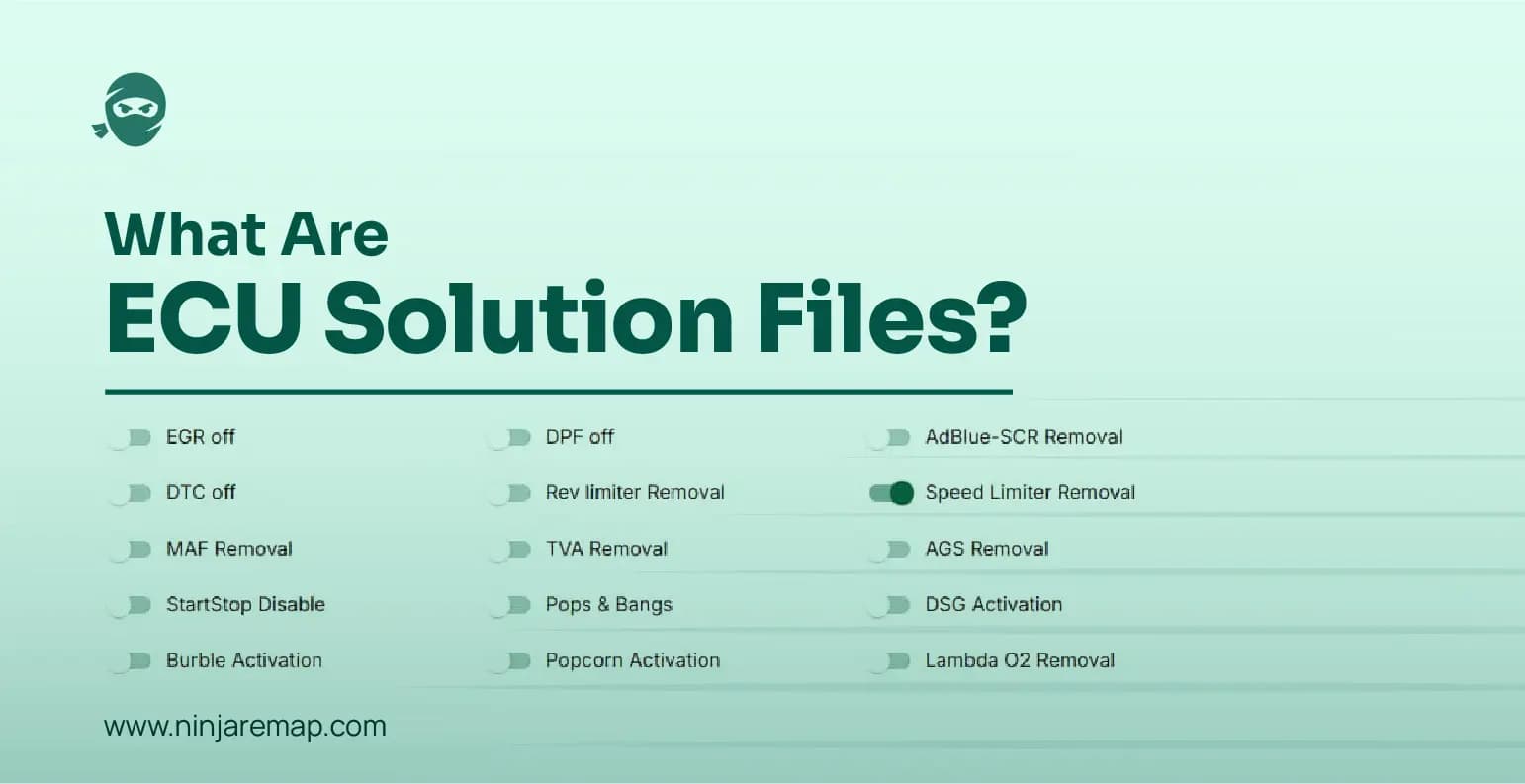
To remove the swirl flaps, you need to have ECU remapping knowledge and experience working with software like WinOLS, ECM Titanium or RaceEvo. At NinjaRemap we offer you ECU Remapping files for both petrol and diesel engines. We cover solutions like DPF off, EGR off, DTC off and a lot more in our ECU Remapping Service Files. You can send your original ECU file to our “ECU Remapping Service” for remapped files and then you can write it on the car with safety and no problems.
Potential Risks and Considerations of Swirl Flap Off:
While swirl flap delete can Increase reliability, there are some risks and considerations to keep in mind:
-
Emissions Compliance:
Removing swirl flaps may cause the vehicle to fail emissions tests in certain regions.
-
Impact on Low-End Performance:
Some engines may experience reduced low-RPM torque after flap removal.
-
Professional Tuning Required:
Improper ECU Tuning can lead to engine malfunctions or poor performance.
-
Warranty Voiding:
Swirl flap off may void the vehicle’s warranty, especially if detected by the manufacturer.
Conclusion:
swirl flaps are designed to improve emissions and low RPM efficiency, their potential for mechanical failure presents a Important risk to engine . Removal, followed by professional ECU remapping, is a widely adopted solution to eliminate this risk and ensure stable engine operation. This tuning process not only prevents catastrophic damage but can also simplify the engine bay and reduce future maintenance concerns related to the EGR and DPF systems. For many vehicle owners, this proactive modification offers valuable long-term peace of mind.